
Discounts, VAT refunds, and uneven pricing have quietly reshaped how collectors perceive fairness, trust, and value.
Luxury watch pricing is often described as rational, controlled, and deliberate. In reality, it operates within one of the most psychologically charged environments in modern consumer culture.
Prices are shaped not only by production costs or brand positioning, but by waiting lists, regional tax structures, secondary-market dynamics, and unequal access to supply.
These forces influence how collectors interpret legitimacy and emotional value, often more powerfully than the specifications of the watches themselves.
This article examines the psychology of luxury watch pricing through the lenses of behavioural economics and social psychology.
Drawing on concepts such as reference pricing, inequity aversion, and social comparison, it explores how contemporary pricing practices affect trust in brands and long term attachment among collectors.

It builds on earlier Watch and Bullion articles on waiting list psychology, instant gratification through Buy Now Pay Later models, and the rise of quiet luxury to present a coherent framework for understanding value in high end watch collecting.
Price as a Psychological Signal in Luxury Watches
In luxury markets, price functions less as a reflection of cost and more as a psychological signal (Spence, 1973).
Signalling theory suggests that when quality is difficult to evaluate directly, consumers rely on price as a proxy for underlying value.
Mechanical watches exemplify this condition. Their functional purpose has been eclipsed by inexpensive digital alternatives, yet they command prices that far exceed utilitarian benchmarks.
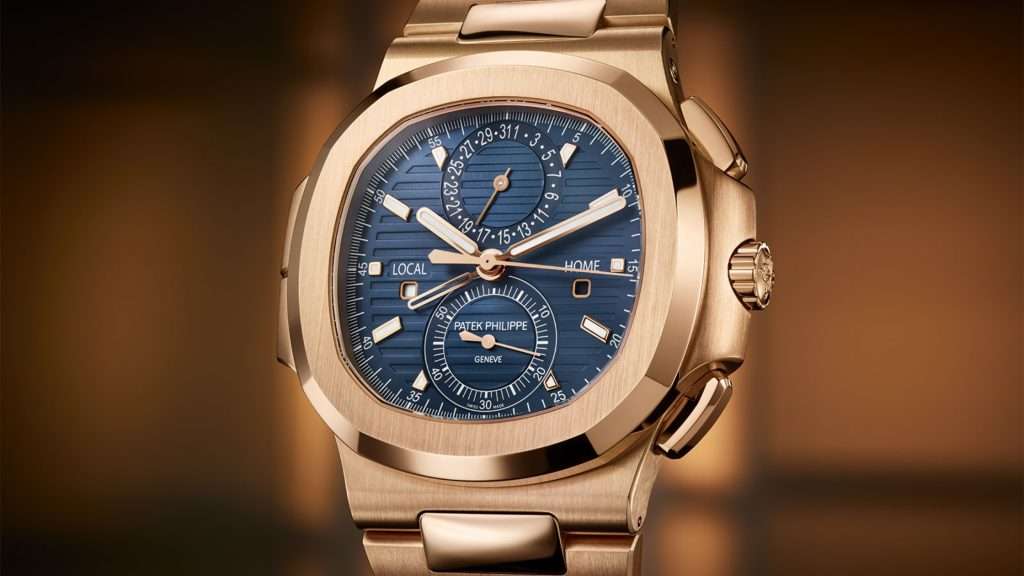
Research shows that consumers use price as a heuristic for quality, authenticity, and legitimacy, particularly in uncertain contexts (Rao & Monroe, 1989).
In watch collecting, the list price becomes a foundational reference point. It communicates scarcity, legitimacy, and value within the system.
When a watch carries a high and stable retail price, collectors interpret this as evidence of controlled production and brand confidence.
Problems arise when this signal becomes inconsistent.
Discounts, regional price differences, and visible arbitrage opportunities introduce ambiguity. The price no longer communicates meaning clearly.
Instead, it invites scrutiny and comparison, shifting the collector’s attention away from craftsmanship and towards system mechanics.
Reference Pricing and the Anchoring Effect
Reference pricing theory explains how consumers evaluate prices relative to internal benchmarks rather than in absolute terms (Kalyanaram & Winer, 1995).
In luxury watches, the manufacturer’s recommended retail price acts as the dominant anchor. Waiting lists reinforce this anchor by framing the price as fixed and earned through patience rather than negotiation.
VAT refunds and grey market activity fracture this anchor. When collectors observe the same watch acquired immediately at a lower effective price due to tax optimisation or jurisdictional differences, the original reference price loses psychological authority.
Even collectors who pay full retail may experience cognitive dissonance as the legitimacy of the anchor weakens.
Empirical research suggests that inconsistent pricing reduces perceived price credibility and damages long term brand equity, even when consumers personally benefit from lower prices (Xia et al., 2004).
In luxury contexts, where emotional coherence matters more than transactional efficiency, this erosion is particularly costly.
Inequity Aversion and Perceived Fairness
Inequity aversion refers to the discomfort individuals feel when outcomes are perceived as unfair, even if they are not personally disadvantaged (Fehr & Schmidt, 1999). Luxury watch pricing activates this mechanism with unusual intensity.
Collectors rarely object to high prices themselves; instead, dissatisfaction emerges when rules appear uneven.
When access to retail pricing depends on geography, informal relationships, or opaque allocation criteria, the transaction shifts from a market exchange to a social comparison exercise.
Buyers begin to evaluate not the watch, but their relative standing within the system.
This explains why opaque waiting lists and preferential treatment generate resentment.
The psychological issue is not scarcity but the lack of clear and consistent rules. Over time, inequity aversion undermines emotional attachment to both product and brand, regardless of technical excellence.
Discounts, VAT Refunds, and Moral Licensing
Discounts and VAT refunds introduce a further psychological layer.
Behavioural research shows that securing a lower price often triggers feelings of competence and self attribution (Mazar & Zhong, 2010).
The buyer feels clever rather than indulgent, a response linked to moral licensing.
In isolation, this effect can increase satisfaction. At scale, however, it undermines collective trust.
When visible discounts become common, they reframe the original price as flexible rather than principled.
Research on price fairness demonstrates that consumers tolerate high margins but react strongly to perceived opportunism or unequal treatment (Bolton et al., 2003).
In luxury watch collecting, this reframing damages the narrative that justifies ownership.
The watch becomes a financial manoeuvre rather than a symbol of craftsmanship, patience and reward.
Emotional value gives way to tactical thinking.
Secondary Markets and Social Comparison
The secondary market intensifies social comparison processes.
Watches trading above retail confer validation, while those available below retail introduce quiet doubt.
Social comparison theory suggests that individuals evaluate their decisions by observing others, particularly in ambiguous environments (Festinger, 1954).
When secondary prices decline, collectors may retroactively reassess their purchases.
This can lead to regret, defensive rationalisation, or disengagement from the brand.
Importantly, these reactions occur even among financially secure buyers. The issue is psychological coherence, not affordability.
Secondary markets also collapse temporal distance.
The promise of long term value is constantly tested against real time pricing signals. When these signals conflict with brand narratives, trust erodes.
Quiet Luxury and the Restoration of Meaning
Quiet luxury offers a partial corrective to these dynamics. Brands that limit production, avoid overt signalling, and maintain disciplined pricing structures reduce cognitive noise around value.
Delayed production restores the link between effort and reward, a mechanism closely related to the IKEA effect, where labour increases perceived value (Norton et al., 2012).
In this context, higher prices feel justified because they are embedded within a narrative of restraint. Scarcity becomes credible rather than performative. Ownership reflects alignment with values rather than access to loopholes.
Quiet luxury does not eliminate inequality, but it reduces its visibility. This matters psychologically. When rules are clear and consistently applied, collectors experience less social comparison and greater emotional satisfaction.
Implications for Brand Trust and Strategy
From a psychological perspective, trust in luxury pricing depends on three conditions. Consistency across regions and channels. Transparency of rules and allocation mechanisms. Alignment between price and visible effort or restraint.
When these conditions are met, high prices enhance emotional value. When they are violated, even modest discrepancies can produce disproportionate damage.
Behavioural research consistently shows that trust, once lost, is difficult to rebuild, particularly in symbolic consumption categories.
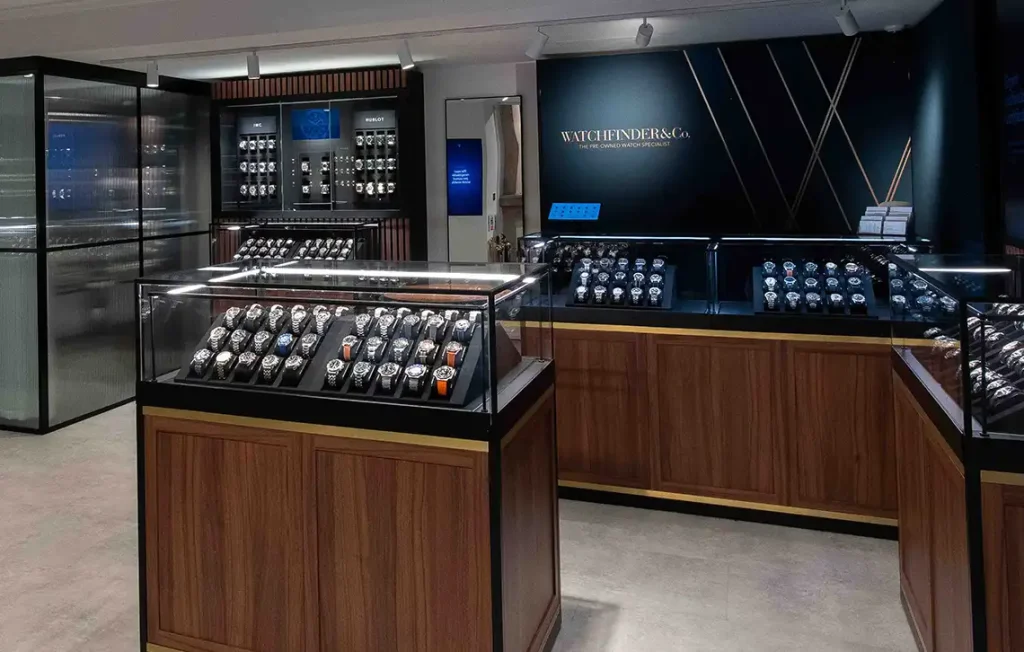
Luxury watch brands face a strategic choice. Short term sales can be accelerated through flexible pricing and selective access.
Long-term legitimacy, however, depends on perceived fairness. In an increasingly transparent market, collectors remember systems as much as products.
Conclusion
Luxury watch pricing is not simply a financial mechanism; it is a psychological system. Prices are interpreted, compared, and remembered long after transactions are complete.
Discounts, VAT differentials, and unequal access affect not only pricing outcomes, but how collectors understand value and fairness.
For most collectors, the issue is rarely the absolute price of a watch, but whether the system behind that price feels consistent and fair.
For brands, the challenge lies less in justifying high prices and more in maintaining the psychological conditions that make those prices feel legitimate over time.
Frequently Asked Questions About Luxury Watch Pricing Psychology
Why do collectors react so strongly to discounts in luxury watches?
Because discounts disrupt reference prices. Even when a buyer benefits financially, visible price differences weaken trust by making pricing feel arbitrary rather than earned.
How do VAT refunds affect perceived fairness in watch pricing?
VAT refunds introduce unequal effective pricing across regions. Psychologically, this triggers inequity aversion, especially when collectors compare effort and access rather than absolute cost.
Is high pricing itself the problem in luxury watches?
No. Research shows collectors tolerate high prices when rules feel consistent. Dissatisfaction arises when access and outcomes differ without transparent justification.
Why do secondary market prices influence emotional attachment?
Secondary markets function as social comparison environments. Prices above retail validate decisions, while prices below retail can undermine confidence and satisfaction.
Does quiet luxury reduce pricing dissatisfaction?
Yes. Quiet luxury restores coherence between effort, scarcity, and reward. When production is visibly constrained and access is disciplined, higher prices feel more legitimate.
How can brands protect long term trust in pricing?
By maintaining consistency across regions, clarifying allocation rules, and aligning price with visible effort or restraint. Behavioural research shows trust depends more on fairness than generosity.
References (APA 7th Edition)
Bolton, L. E., Warlop, L., & Alba, J. W. (2003). Consumer perceptions of price fairness. Journal of Consumer Research, 29(4), 474–491. https://doi.org/10.1086/346244
Fehr, E., & Schmidt, K. M. (1999). A theory of fairness, competition, and cooperation. Quarterly Journal of Economics, 114(3), 817–868. https://doi.org/10.1162/003355399556151
Festinger, L. (1954). A theory of social comparison processes. Human Relations, 7(2), 117–140. https://doi.org/10.1177/001872675400700202
Kalyanaram, G., & Winer, R. S. (1995). Empirical generalizations from reference price research. Marketing Science, 14(3), G161–G169. https://doi.org/10.1287/mksc.14.3.G161
Mazar, N., & Zhong, C. B. (2010). Do green products make us better people. Psychological Science, 21(4), 494–498. https://doi.org/10.1177/0956797610363538
Norton, M. I., Mochon, D., & Ariely, D. (2012). The IKEA effect. Journal of Consumer Psychology, 22(3), 453–460. https://doi.org/10.1016/j.jcps.2011.08.002
Rao, A. R., & Monroe, K. B. (1989). The effect of price, brand name, and store name on buyers’ perceptions of product quality. Journal of Marketing Research, 26(3), 351–357. https://doi.org/10.1177/002224378902600309
Spence, M. (1973). Job market signaling. Quarterly Journal of Economics, 87(3), 355–374. https://doi.org/10.2307/1882010
Xia, L., Monroe, K. B., & Cox, J. L. (2004). The price is unfair. Journal of Marketing, 68(4), 1–15. https://doi.org/10.1509/jmkg.68.4.1.42733