King Harald’s Rolex GMT-Master accompanied him through much of his adult life, becoming familiar in photographs of royal occasions and days spent sailing. Received in 1962, the reference 1675 remained in use for more than six decades. By its later years, the red-and-blue bezel had faded almost beyond recognition, giving a widely recognisable watch an unusually personal appearance.
Following his death on 28 August 2026, attention has returned to that long association. There is an understandable interest in its provenance, but the more revealing part of the story concerns how Harald used it. A watch now discussed as a significant royal possession spent most of its life being treated as something dependable to wear.
A gift in 1962
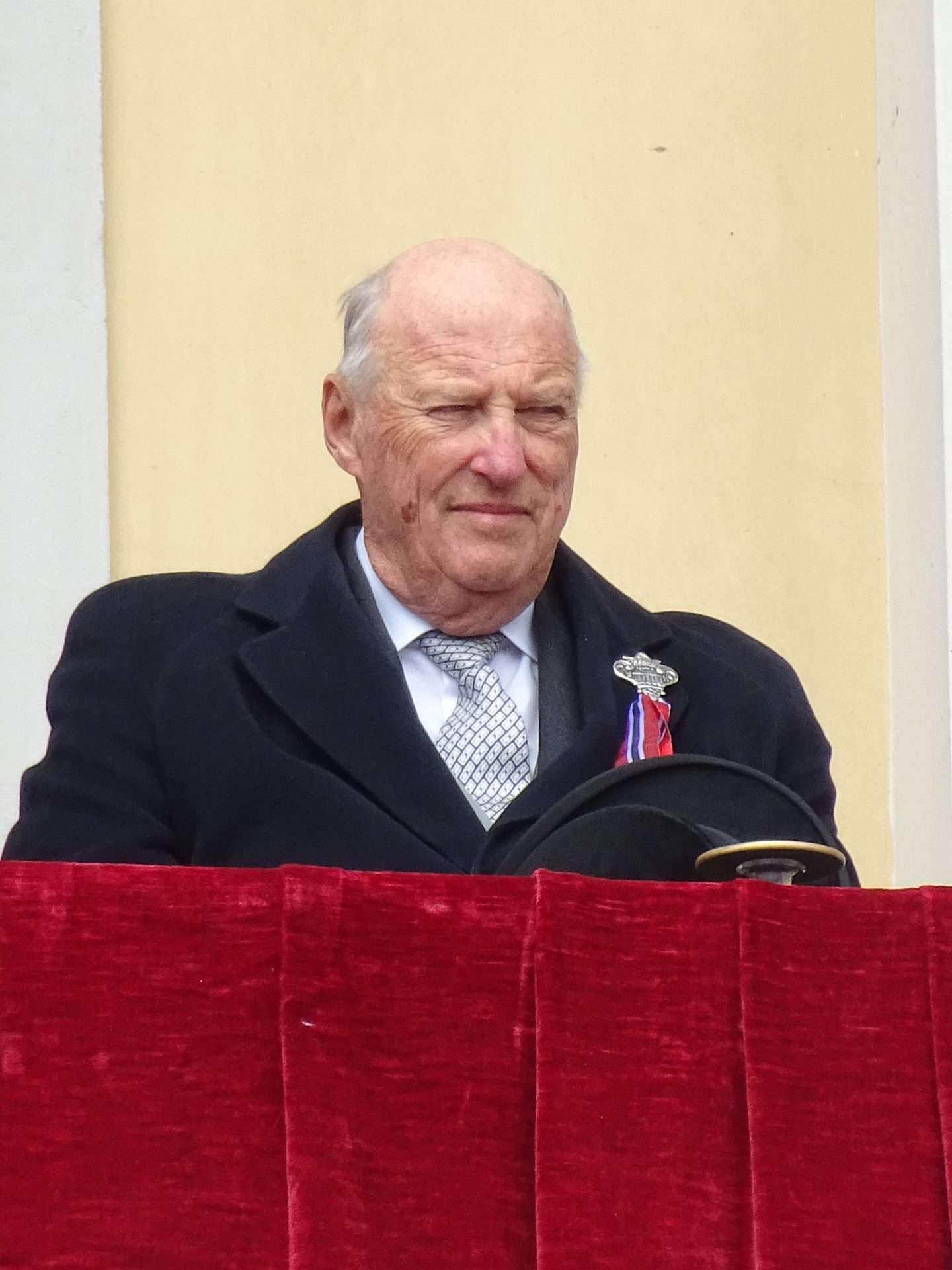
The ownership date has support beyond recent social media accounts. In a Tidssonen interview with photographer Lars Kehrel of WristRockers, Kehrel recalled meeting Harald at a sailing club on Lake Constance. The king and his crew joined their table to watch football, and conversation eventually turned to the watch on his wrist.
According to Kehrel, Harald said he had owned it since 1962 and worn it more or less daily. His surprise at the photographers’ interest is a particularly appealing detail: what they recognised as a notable vintage Rolex was, for him, a familiar possession.
Rolex Magazine’s account of Harald’s 2019 D2 interview adds that it was a gift from one of his godparents. The account does not establish which godparent gave it, and there is no need to resolve that uncertainty through guesswork. The significant point is that he kept using a personal gift long after it had acquired a wider following.
The Rolex GMT-Master 1675
Introduced around 1959 and produced until approximately 1980, the 1675 occupies a substantial chapter in GMT-Master history. Its crown guards and aluminium bezel insert distinguish it from the earlier reference 6542. Over its production life, changes to dials, hands and case details created the variations that now occupy collectors. Wind Vintage’s reference guide documents that development in detail.

The distinction matters when discussing King Harald’s Rolex GMT-Master. An early-1960s 1675 and a matte-dial watch from the 1970s belong to the same reference, but they should not be presented as identical configurations. Nor does a long ownership history establish that every component remained unchanged. Without a complete service record, claims about absolute originality would go beyond the available evidence.
That qualification does little to diminish the watch’s interest. The appeal here depends on a documented relationship between an object and its owner, rather than an assertion that the object survived untouched.
King Harald’s Rolex GMT-Master as an everyday watch
Harald did not reserve the GMT-Master for sailing or particular occasions. In his interview with D2, he said that he had used it every day since receiving it in 1962. It appears repeatedly across photographs of public duties, family life and time aboard a boat, giving unusual visual continuity to his own account.
The chronology assembled by Rolex Magazine shows the watch with Harald and Sonja in 1968, at formal royal engagements and during later regattas. In the D2 interview, Harald recalled sending it to Rolex for servicing some years earlier and said that the company was amazed the watch was still in use. He also valued its waterproof and shock-resistant construction aboard a boat. It was maintained, but never retired from the role for which it had been made.
Its interest lies in that continuity. The same watch accompanied ceremonial dress, ordinary public appearances and competitive sailing without becoming a costume for any one of them. Usefulness, sentiment and habit may all have contributed, although their proportions are impossible to separate. Harald’s public life simply made a private pattern of ownership unusually visible.
The faded bezel and the meaning of condition
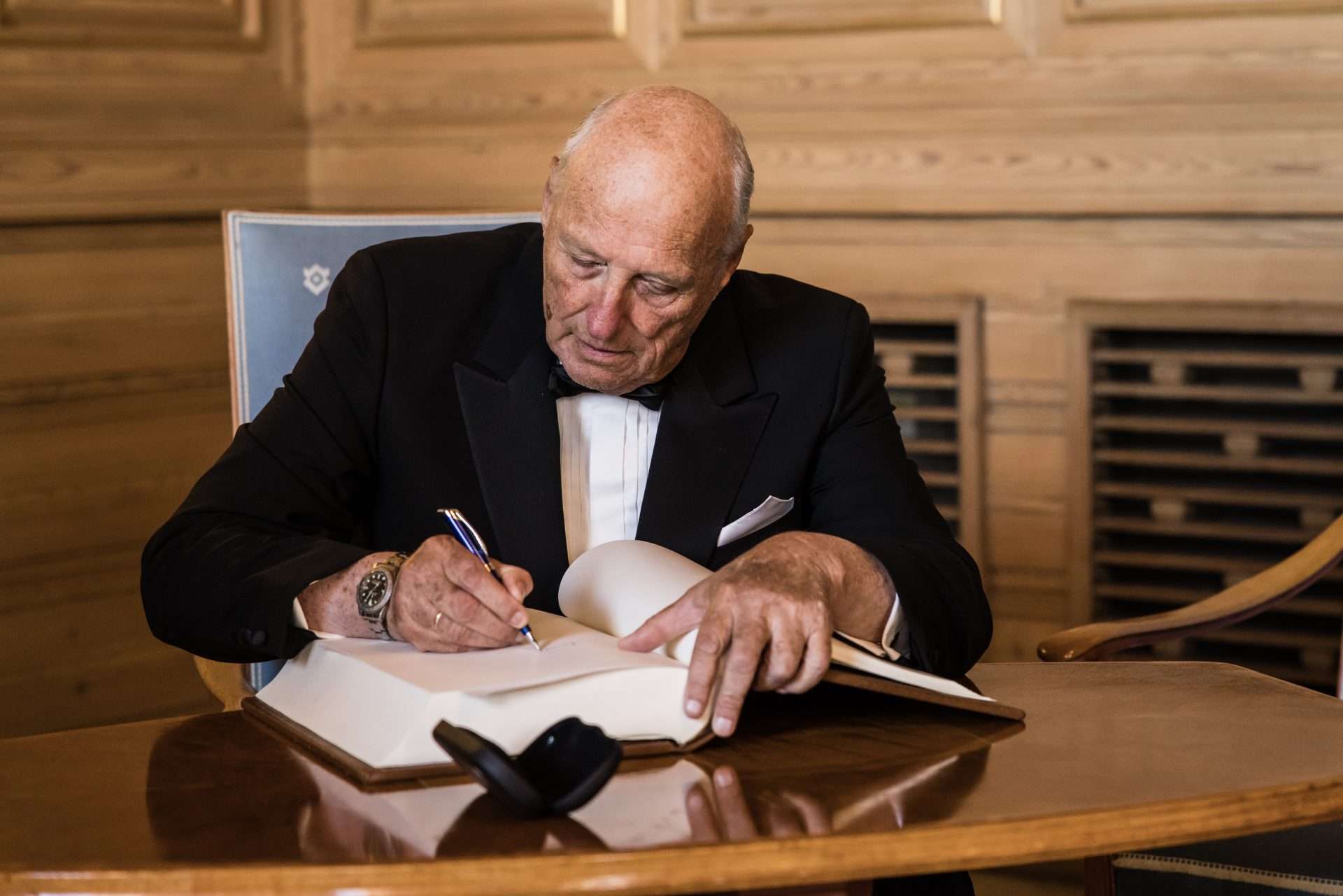
The near-colourless bezel is the most distinctive feature of King Harald’s Rolex GMT-Master in later photographs. Collectors often describe this appearance as a “ghost” bezel, referring to the loss of much of the insert’s original colour. In Harald’s case, it is tempting to give every mark a particular explanation, although photographs cannot establish precisely how the finish changed or the contribution of individual conditions.
What the photographs do show is a considerable departure from the familiar red-and-blue appearance. That change has become part of how the watch is recognised. Restoring the original visual effect would therefore alter something central to its present identity, even if it made the watch look newer.
Condition and provenance answer different questions. Condition concerns the object as it survives; provenance concerns its documented history. Wear alone does not create an important watch, and an attractive faded insert is not evidence of a remarkable past. Here, the interest comes from being able to connect the watch to decades of recorded use by the same person.
What remains after six decades
D2’s recent article on the future of King Harald’s Rolex describes King Harald’s Rolex GMT-Master as having remained in daily use for 64 years. Its eventual destination is not established by the sources available for this article, and speculation about an heir or auction price would add little to our understanding of the watch.
Its history does offer a useful perspective on the culture surrounding watch collecting. So much attention falls on acquisition that the years which follow can receive comparatively little consideration. Harald’s GMT-Master is interesting because those years are unusually well documented, allowing us to see what long ownership can give a familiar design.
The lasting appeal of King Harald’s Rolex GMT-Master is that its public importance grew around an ordinary pattern of use. Over more than six decades, he continued wearing a gift that had proved useful to him, and the surviving photographs allow us to follow that relationship as both the man and the watch grew older.
Featured photograph: King Harald V signing the protocol at Oslo City Hall, 6 September 2022, with his Rolex GMT-Master visible on his right wrist. Photo: Thomas Eckhoff / The Kavli Prize via Wikimedia Commons, CC BY-SA 2.0. Resized for display.