The Alpiner Extreme Solarmetre Route du Rhum was one of our unexpected favourites from Geneva Watch Days 2026. We spend much of our time around mechanical watches, but this Alpina caught our attention through its proportions, materials and the prospect of straightforward everyday ownership. Its appeal was immediate enough for us to share it on Instagram and Facebook, and it deserves more consideration than a social caption allows.
Following the variety of releases in our Geneva Watch Days 2026 overview, this is a useful watch to return to. It gives us a reason to consider what we actually want from a sports watch when we are choosing something to wear.
The Alpiner Extreme Solarmetre in a compact case
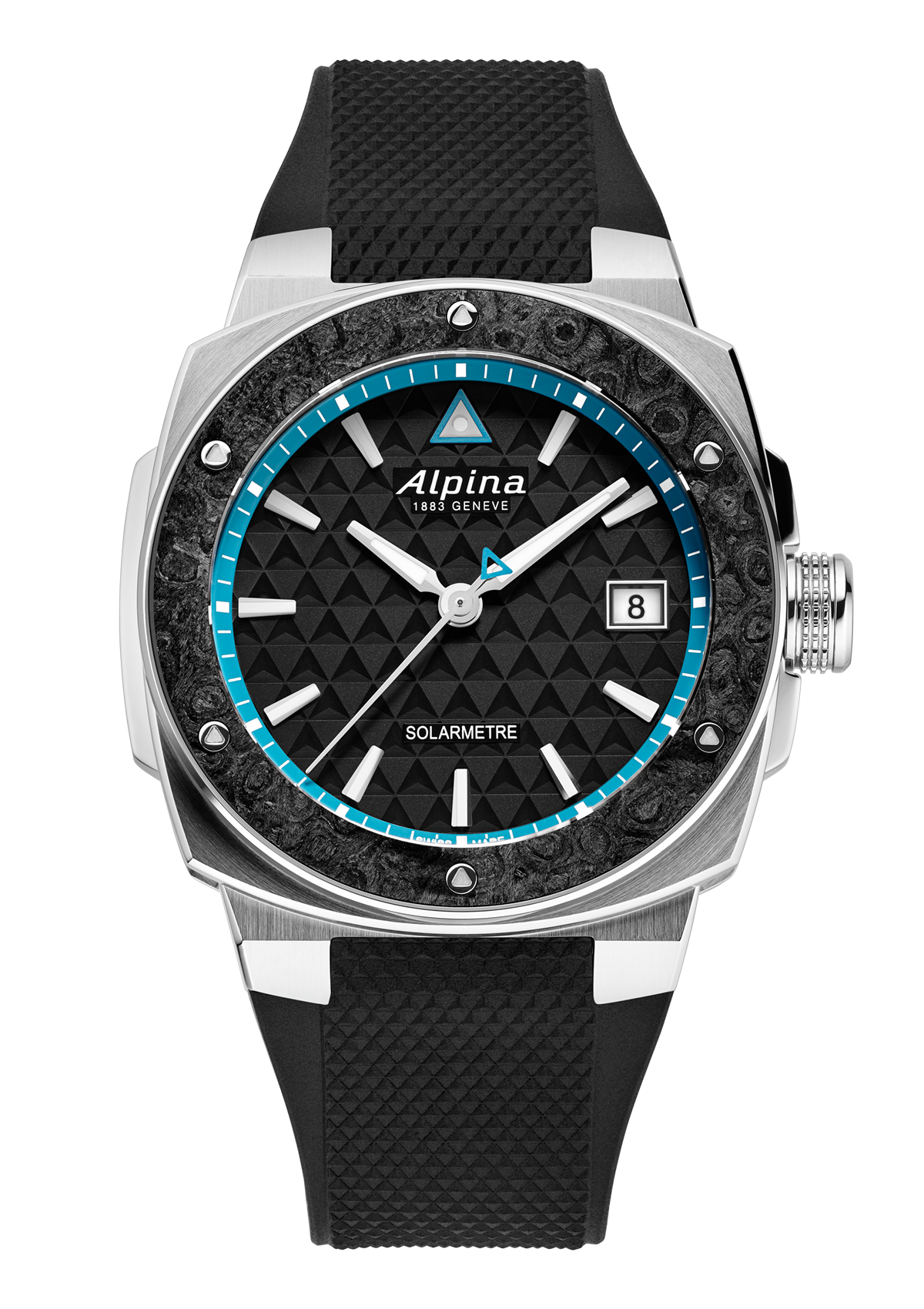
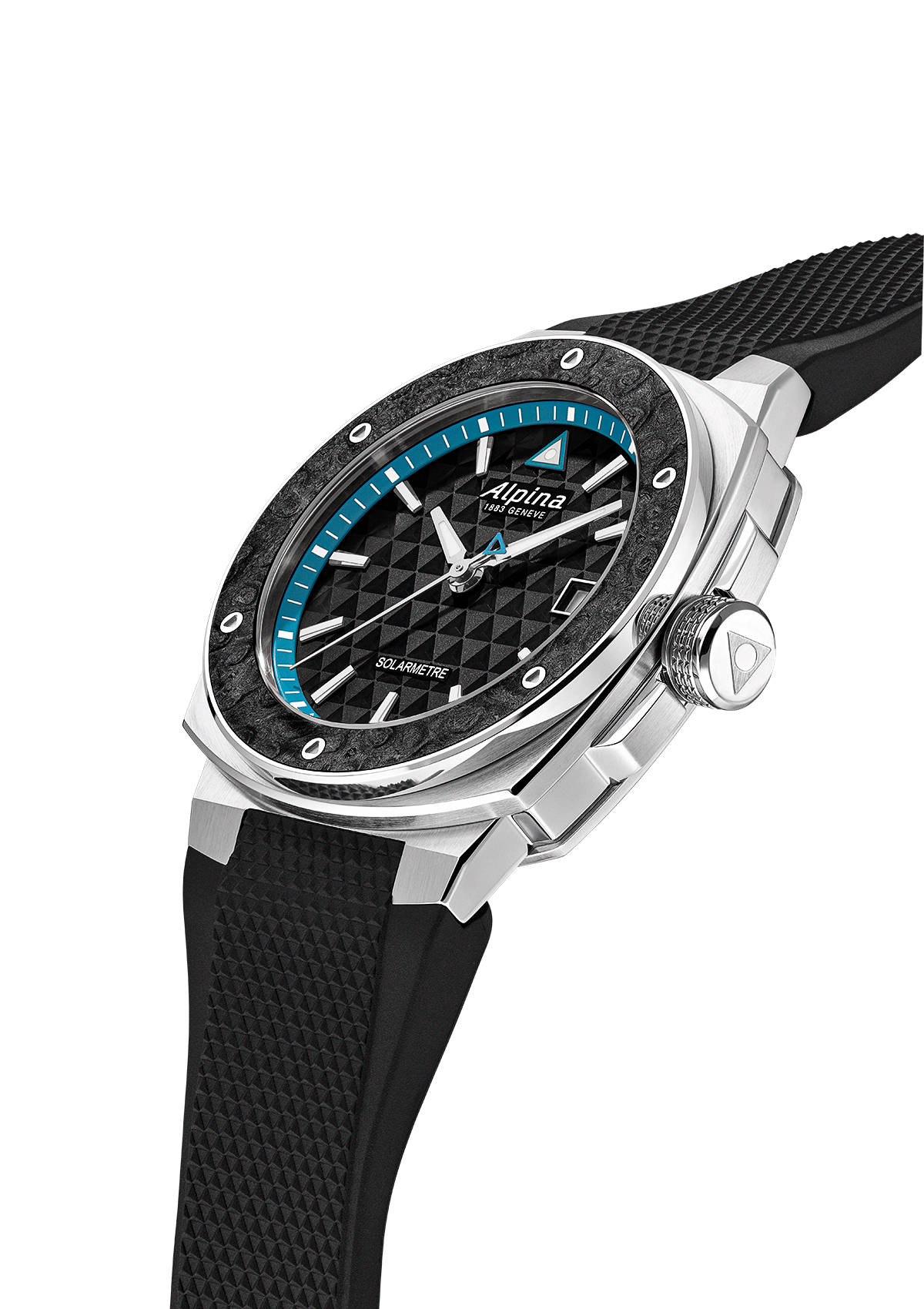
Alpina specifies a steel case measuring 37.5 × 38.9 mm, with a carbon-fibre bezel insert, black rubber strap and 100 metres of water resistance. The reference is AL-140BT3AE6, and production is limited to 513 pieces. These details are confirmed on Alpina’s official model page.
The dimensions deserve attention because the case has considerable visual weight. Its cushion shape, broad shoulders and exposed bezel screws give it an assertive outline, while the relatively modest width should make that design easier to accommodate. A shaped case cannot be judged by the same number alone as a round watch, however, and we would want to try it on before reaching a conclusion about fit.
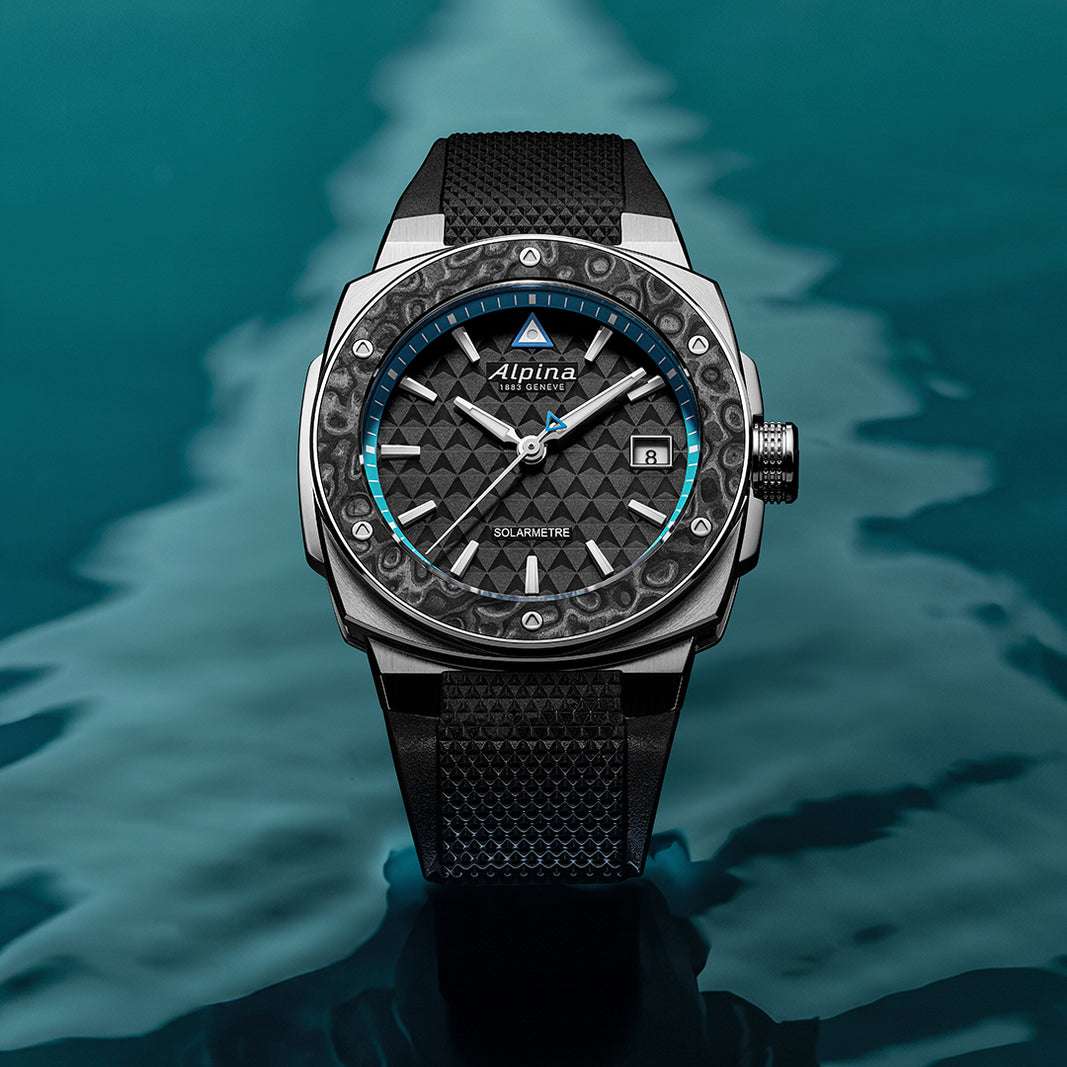
What works particularly well in the photographs is the balance between the dark centre and the steel surrounding it. The bezel gives the dial a substantial frame, but the bright edges of the case prevent the watch from becoming a single black mass. There is enough contrast to make the construction legible without adding another colour.
Carbon and turquoise with a clear purpose
The carbon insert is the detail that first drew us in. Its irregular surface sits against the repeated triangles of the dial, introducing variation to an otherwise highly ordered design. The textured strap continues that pattern beyond the case, making the whole watch feel visually connected.
Turquoise provides the separation the dial needs. Around its perimeter, the colour helps distinguish the minute track from the black centre; smaller accents at twelve and on the seconds hand bring it into the display. The hands and hour markers remain prominent, which matters when so much surface texture is competing for attention.
There is plenty happening here, and anyone who prefers a plain dial may find it too busy. For us, the attraction is that each element has a recognisable role. The carbon supplies texture, the steel defines the outline, and the turquoise brings light into the face of the watch.
What solar power adds to ownership
The Alpiner Extreme Solarmetre uses a Swiss solar quartz movement developed by La Joux-Perret. Light passes through its translucent dial to charge the battery, with Alpina quoting up to ten months of operation in complete darkness from a full charge. Natural and artificial light can both provide energy, according to the manufacturer’s explanation of the solar system.
For someone who rotates between watches, the practical appeal is considerable. A piece left unworn for a few weeks can remain ready to use, avoiding the routine of winding and resetting it before leaving the house. That convenience becomes more valuable when the watch is intended for weekends, travel or occasional use.
Solar technology already has a place in our editorial coverage, including our article on the Citizen Eco-Drive Calibre 0100. Alpina’s contribution here is to combine that approach with a sports-watch design that appeals on its own terms.
We enjoy the involvement that comes with a mechanical movement, whether through winding it or understanding how it works. There is room in the same collection for a watch whose appeal includes requiring less attention. The decision can depend on the day and the purpose, without becoming a declaration of loyalty to one technology.
How the Route du Rhum connection shapes the watch
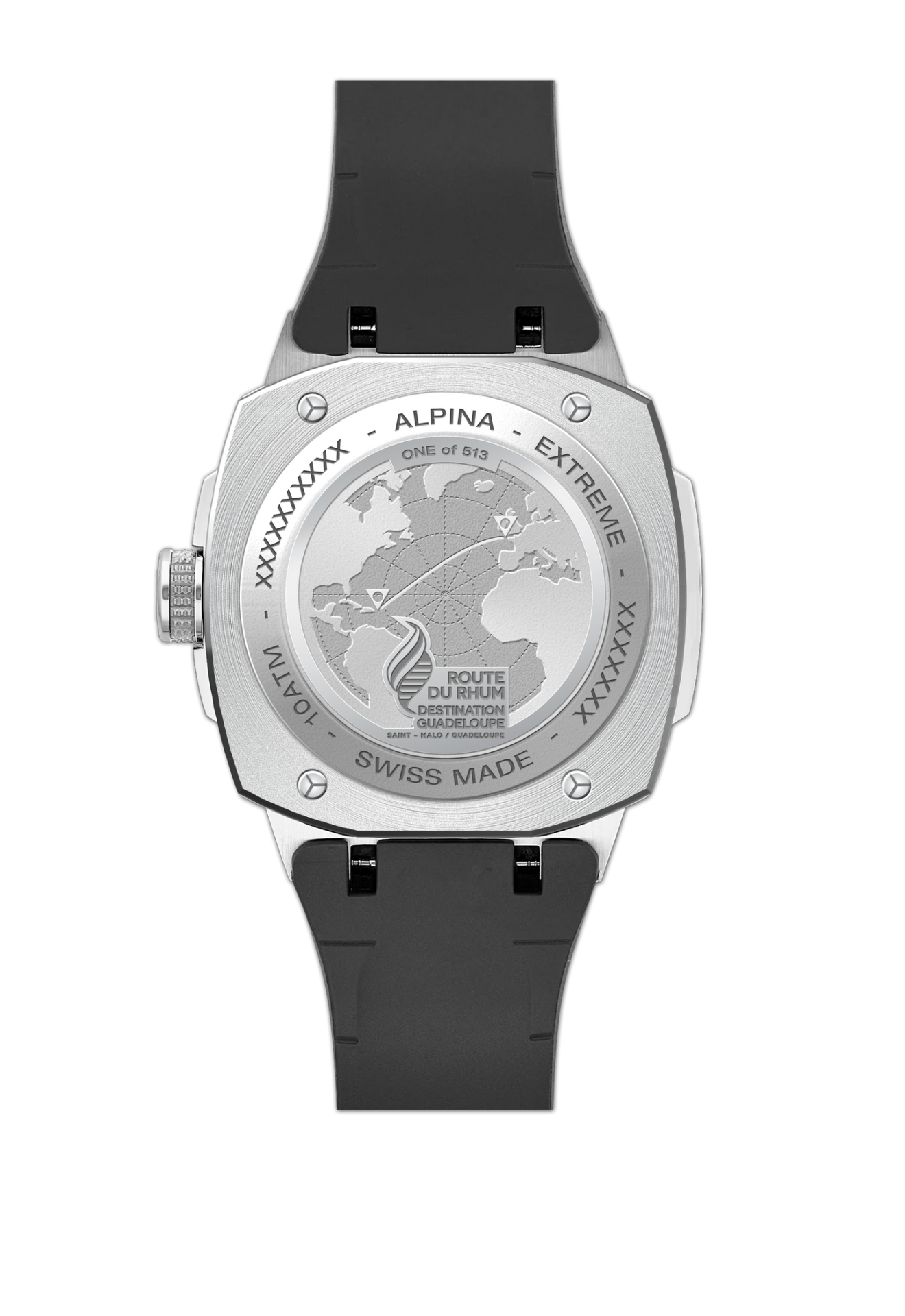
Alpina is the official timekeeper of the 2026 Route du Rhum, the solo transatlantic race from Saint-Malo to Pointe-à-Pitre in Guadeloupe. The watch carries the race route on its steel caseback, as explained in Alpina’s presentation of the partnership.
The connection offers a context for the turquoise and the sporting character, although the design does not require an interest in sailing to make sense. From the front, the colour and materials carry the idea without a large event logo taking over the dial.
That gives the watch a better chance of remaining appealing once the race has passed. For a buyer who follows the event, the caseback adds a specific association; for everyone else, the decision can rest on the watch itself.
Price and the case for owning one
The reported European launch price is €1,095, consistent with the figure in our social posts and contemporary launch coverage. At that level, the Alpiner Extreme Solarmetre needs to appeal as a complete object. Solar power is useful, but the quality of the case, the execution of the dial and the feel of the strap will determine whether the price makes sense in person.
We would also give the limited production little weight in that decision. A numbered edition can add context to ownership, but the more relevant question is whether the watch would remain desirable without the number.
Our interest comes from the combination of compact proportions, distinctive surfaces and everyday convenience. These are impressions drawn from the release material, with comfort and finishing still to be assessed on the wrist. The Alpiner Extreme Solarmetre has nevertheless given us a clear reason to look beyond our usual mechanical preferences, because it is easy to imagine choosing it for an ordinary day.