Long viewed as a fashion-led watch brand, Chanel watchmaking has evolved through decades of manufacture investment and strategic partnerships. Its stake in Kross Manufacture reveals how seriously it now approaches modern horology.
When people think of Chanel, they think of fashion, fragrance and cultural symbolism.
The name evokes couture ateliers, the scent of No. 5 and a visual language that has shaped modern luxury for more than a century.
What rarely comes to mind is Chanel watchmaking in any serious mechanical sense.
For many readers, and even for some collectors, Chanel watches are still perceived as design objects rather than products of engineering discipline.
That perception no longer reflects reality.
Chanel’s recent decision to acquire a 30 per cent stake in Kross Manufacture is not an isolated transaction or a response to short-term market conditions.
It is the latest expression of a long, methodical strategy that has quietly embedded Chanel watchmaking within the technical infrastructure of Swiss horology. Viewed in isolation, the move may appear unexpected; however, when viewed in context, it is entirely consistent.
Why Chanel Watchmaking Is Rarely Taken Seriously
The distance between Chanel’s horological capability and public perception has historical roots.
Chanel entered the watch industry later than traditional Swiss manufacturers and did so through form rather than mechanics.
Early watches prioritised elegance, proportion and brand coherence, reinforcing the idea that they were extensions of fashion rather than expressions of mechanical expertise.
Unlike maisons whose legitimacy rests on centuries of movement production, Chanel’s authority was earned in different fields.
As a result, even as its watches became more technically ambitious, the narrative surrounding Chanel watchmaking struggled to keep pace. This gap was widened by the brand’s deliberate reluctance to engage in overt technical messaging or to position itself as a challenger to established watchmaking hierarchies.
Yet beneath that restraint, capability was accumulating.
The J12 and Chanel’s First Technical Turning Point
The introduction of the J12 in 1999 marked the first decisive shift. Its use of high-tech ceramic was not merely stylistic but technical, arriving at a time when ceramic was still marginal in sports watch construction. The J12 succeeded because it avoided imitation. It neither chased the tool-watch aesthetic nor presented itself as novelty. It established an identity that endured.
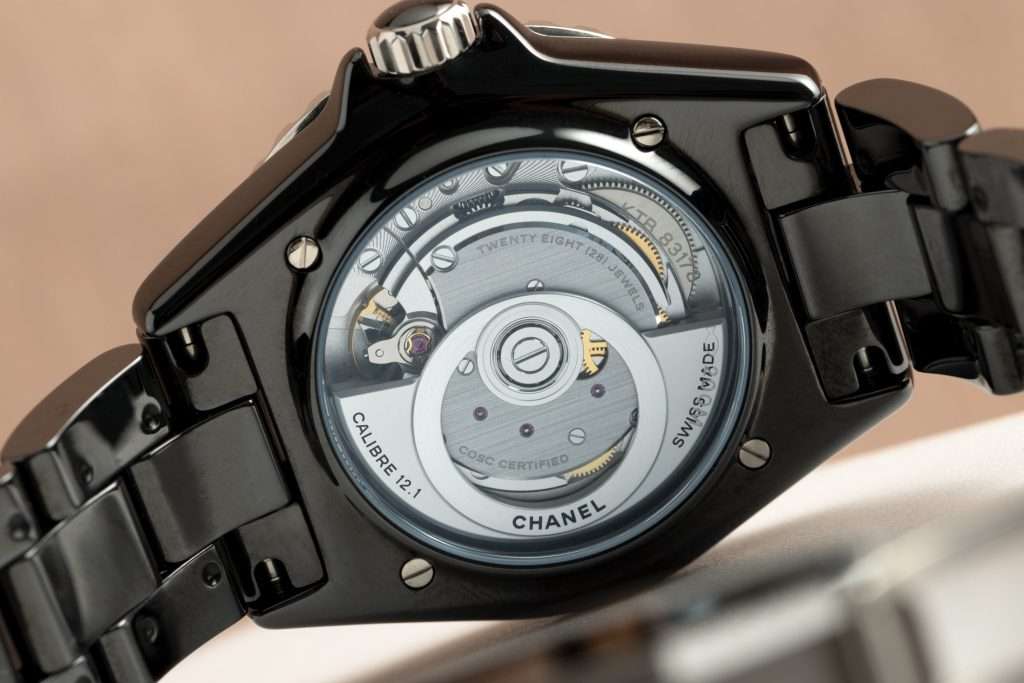
The more consequential evolution came in 2019, when the J12 was relaunched with the Calibre 12.1, produced by Kenissi. Kenissi movements are widely respected for their architecture, reliability and chronometer certification, and Chanel holds a minority stake in the manufacture. This decision repositioned the J12 from a design icon to a technically credible watch supported by an industrial movement platform trusted across the industry.
At that point, Chanel watchmaking moved beyond aesthetics alone. It became structurally aligned with the performance standards expected by informed collectors.
Inside Chanel’s Watch Manufacture

Alongside external partnerships, Chanel has invested heavily in its own watch manufacture in La Chaux-de-Fonds. This facility functions as a genuine centre for movement development and assembly, not as a symbolic workshop. Here, Chanel has produced a series of proprietary calibres that demonstrate a commitment to mechanical depth rather than surface-level complication.
Chanel could have accelerated its watchmaking credentials through acquisition or licensing, but instead chose the slower and more demanding route of developing capability from within.
The Monsieur de Chanel introduced Calibre 1, a manually wound movement designed specifically for its jumping hour and retrograde minute display.
This was not a reworked base calibre but an architecture conceived around the complication itself. Subsequent developments included skeleton movements such as Calibre 3 and 3.1, which required rigorous engineering to maintain precision and stability while exposing the mechanics.

In Chanel watchmaking, design and mechanics are developed together rather than sequentially, a distinction that separates manufacture thinking from styling alone.
More recently, the J12 Automaton, powered by Calibre 6, illustrated the extent of Chanel’s technical ambition. Automaton watches are among the most complex forms of mechanical horology, demanding years of development for limited commercial return.
Their presence within the catalogue underscores that Chanel watchmaking is guided by long-term capability building rather than volume or trend.
Strategic Partnerships and Minority Stakes
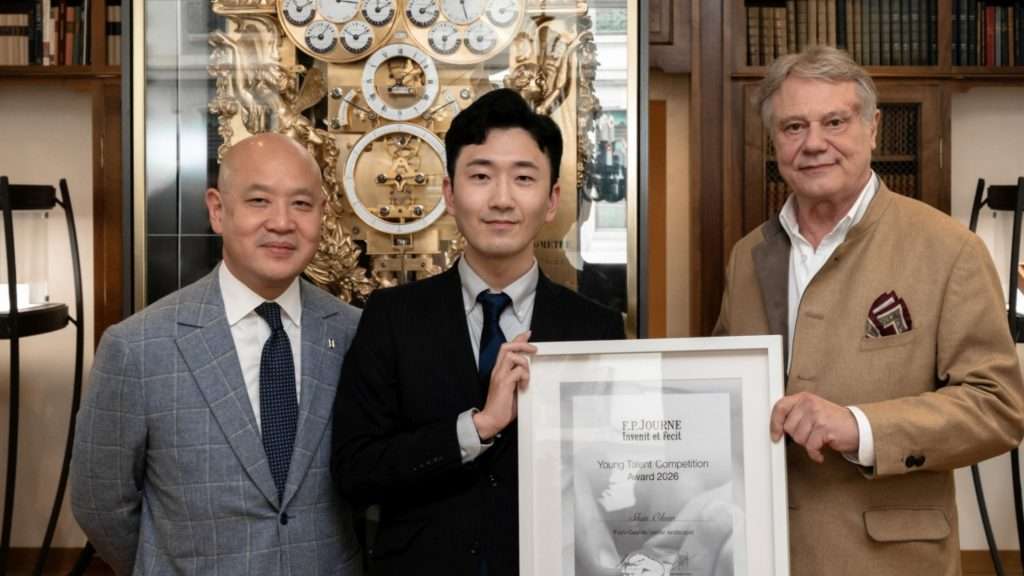
Chanel’s broader strategy does not resemble that of a traditional watch conglomerate. Instead, it has assembled a network of minority investments and partnerships with some of the most respected independent names in modern horology, including F.P. Journe and a minority stake in MB&F. In each case, creative and operational independence has been preserved.
These relationships are not passive financial holdings. They align Chanel watchmaking with high-level expertise in movement architecture, finishing and complication development, while avoiding the homogenisation that often accompanies acquisition. The result is access to knowledge and capability without dilution of identity on either side.
This preference for minority stakes, technical collaboration and long-term capability reflects a broader quiet luxury approach, where credibility is accumulated through substance rather than visibility.
This approach is slow, capital-intensive and deliberately understated. It is also structurally credible.
Why Chanel Invested in Kross Manufacture
The acquisition of a 30 per cent stake in Kross Manufacture fits seamlessly into this framework. While Kross is publicly known for its central tourbillon designs and conceptual projects, the investment focuses on its manufacturing arm rather than its branded output.
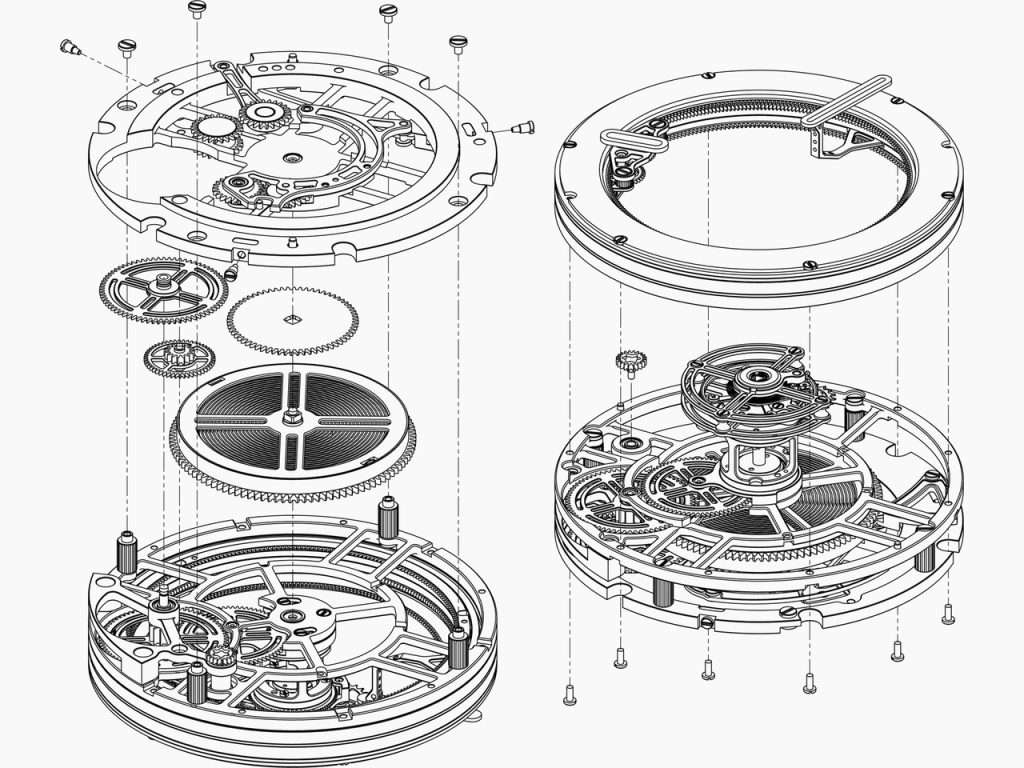
Kross Manufacture operates as a precision engineering facility capable of advanced CNC machining, component fabrication and complete movement production for both internal and third-party projects. By investing at this level, Chanel strengthens its proximity to specialised production capability without forcing integration or scale.
For Chanel watchmaking, the significance lies not in immediate product launches but in optionality. Access to advanced manufacturing supports future development of proprietary components, bespoke engineering and technical independence, reinforcing a foundation that has been built incrementally over decades.
Chanel and Louis Vuitton Are Solving the Same Problem Differently
Chanel’s approach becomes clearer when viewed alongside the strategy pursued by Louis Vuitton within the LVMH ecosystem. Both houses face the same structural challenge: how a fashion-led brand earns lasting legitimacy in a category defined by engineering rather than narrative.
Louis Vuitton’s response has been overt and tightly focused. The re-engineering of the Tambour represents a deliberate attempt to consolidate watchmaking credibility through a singular, controlled product platform. It is a visible assertion of intent.
Chanel’s response has been quieter. Rather than anchoring credibility to a single relaunch, Chanel watchmaking has evolved through manufacturing investment, movement partnerships and minority stakes that strengthen the brand’s technical position from within the supply chain. One approach asserts legitimacy through product clarity. The other accumulates it through infrastructure and expertise.
Both strategies address the same problem; they simply approach it from different directions.
Reframing Chanel’s Role in Modern Watchmaking
The assumption that Chanel is not a serious watchmaker reflects perception rather than substance. Over time, Chanel watchmaking has developed a network of manufacture capability, technical partnerships and long-term investments that place it firmly within the business of modern Swiss horology.
The investment in Kross Manufacture reinforces this trajectory. It adds depth to an already substantial foundation and signals that future developments will be shaped less by seasonal fashion cycles and more by engineering continuity.
Today, Chanel watchmaking is no longer adjacent to serious horology. It is embedded within it, quietly, deliberately and with a clarity of purpose that is only now becoming fully visible.